Closing stocks at the end of the season are estimated at 1.75 million tonnes. © Bremer Baumwollbörse
Between 1960/61 and 2010/11, the world stocks-to-use ratio stayed between 30 and 60 percent. However, since 2011/12 the stocks-to-use ratio has not dipped below 65 percent and has been above 90 percent four times including the last two years. © Bremer Baumwollbörse
The United Nations (UN) have nominated 50 worldwide leaders in sustainability and climate protection – and Amann is presented on behalf of the textile industry. © Amann Group
The total volume amounted to 74 million tonnes. Spunlaid nonwovens, newly included in global supply, slowed to the lowest growth rate in the century at nearly 4 percent to reach almost 7 million tonnes. © Andreas Engelhardt
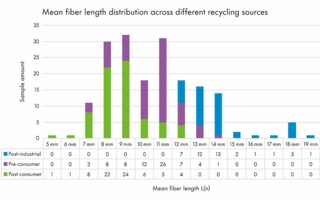
Wound onto a spool, the viscose filament yarn was spun from recycled cotton provided in form of cellulose sheets. Researchers at the Fraunhofer IAP have found a way to turn cotton clothes such as jeans into new high-quality garments rather than lowly cleaning rags. © Fraunhofer IAP
Due to the short-term increase in demand from Chinese customers, Lenzing AG is breaking new ground. For the first time in the history of Austria, a local company is sending goods that are 100 percent produced in Austria directly to China by train. © Lenzing/Scheiblecker
The USDA/FAS MY 2020/21 cotton production forecast is 230,000 tonnes. The new area forecast of 147,965 hectares reflects a 36 percent reduction compared to MY 2018/19. © Quelle: Bremer Baumwollbörse/leere Karte: www.d-maps.com