16/09/2026 – Digital Product Passport (DPP) — auf Deutsch lesen
The Traceable Product History
With the Digital Product Passport (DPP), sustainability moves from being a promise to becoming a verifiable attribute. It provides structured, verifiable information about a product’s origin, materials, manufacturing, environmental impact and care instructions.
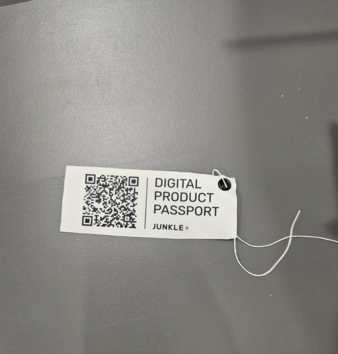
The DDP creates a structured database for traceability. It also makes the circular economy easier to understand. © Junkle
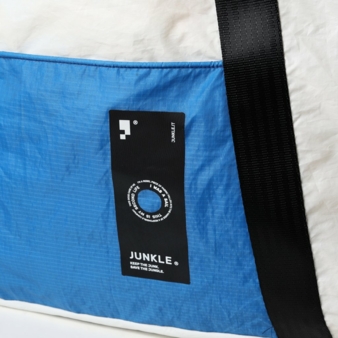
Weekender: the raw material is a repurposed spinnaker sail. © Junkle
Junkle Embraces the Digital Product Passport Early
The Digital Product Passport makes the origin and materials of fashion items traceable. This shows how circularity can be documented with product-specific information. It also helps companies prepare for upcoming EU requirements. Sustainability is a marketing promise in the fashion industry, but one that customers often find difficult to understand. With the Digital Product Passport (DPP), however, sustainability can become a verifiable product feature. A DPP provides structured and verifiable information about a product’s origin, materials, manufacturing, environmental impact, and care instructions in digital form.
The Verifiable Product History
This technology is already being used in practice. The Italian circular fashion label Junkle demonstrates the requirements necessary for its implementation. The Palermo-based company transforms used sails, discarded fabrics, and material scraps into bags, clothing, and accessories. Together with Spherity and its consulting partner Talia, Junkle has equipped its products with Digital Product Passports.
Every product now carries a QR code on its label. When scanned, it opens a digital product passport based on Spherity’s VERA platform. It contains structured information about the product, its materials, and its origin. It also includes details on the manufacturing process, environmental and social impact, and care instructions. This links specific product data to information on the circular economy.
One example is the „Tidal“ bag. Its raw material is a repurposed spinnaker sail. The product passport documents that the sail was sourced via Junkle’s collection network and processed in Palermo. Buyers can now trace where the material came from and where the item was manufactured. A general description is thereby transformed into a verifiable product history.
Transparency as the Foundation for Compliance
The product passport serves several purposes for Junkle. First, it creates a structured database for traceability. It also makes the circular economy easier to understand by linking sustainability claims to specific product data. The material history does not end with the label but remains digitally linked to the respective item. This is particularly important for upcycled products, whose value is tied to the origin of the source materials.
For Junkle, this early adoption serves another purpose as well. The EU Ecodesign for Sustainable Products Regulation (ESPR) establishes the framework for digital product passports and places textiles at the center of future requirements. The regulation for textiles is expected to come into effect in 2027. Junkle is therefore already establishing the data structures, labeling systems, and processes needed to meet future regulatory requirements.
This approach the medium-sized company, is particularly relevant for similarly sized companies in the fashion industry. Compliance does not necessarily require a large organization; the digital product passport can also be implemented even in a smaller company. A key prerequisite is clearly structured product data, as well as processes that reliably record a product’s origin, processing, and other relevant information.
An Early Start Means a Head Start
By entering the field at an early stage, Junkle is already gaining practical experience with data models and DPP processes. When textile-specific requirements become mandatory, the company will not first have to establish the appropriate processes. In addition, a business model is emerging in which circularity is not merely claimed but demonstrated.
As a result, the project extends beyond the individual use case. In the fashion industry, the Digital Product Passport can serve as an interface between regulation and the circular economy. Through its customer communications, Junkle demonstrates how a material’s origin becomes a verifiable product history.