20/10/2025 – The Seam as a Safety Factor — auf Deutsch lesen
Gütermann: Sewing Thread for TL Tests
Anyone sewing military clothing must meet TL requirements precisely. Gütermann classifies the seam as safety-critical and shows which testable criteria and evidence count in tenders.
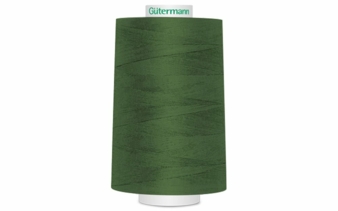
Gütermann K: The seam is safety-critical, and the right thread is decisive for TL conformity. © Gütermann GmbH
At the Protective Wear Days 2026 in Landsberg am Lech (Veit), one component took centre stage: the seam, which quickly becomes a point of failure under extreme stress. Gütermann describes it as the most common weak point under tension, abrasion, heat and moisture. Choosing the wrong thread can trigger seam failure, damage material and pose a safety risk for deployed personnel. This also has formal consequences. TL conformity is a tender criterion, and non-conformity can jeopardise contract award and operational readiness.
Testing and Documentation
TL requirements set the minimum standard. In testing, tensile strength, seam strength and flame protection take centre stage. For sewing threads, yarn fineness, tensile strength, elongation and colour fastness come into focus. Tenders also require unambiguous evidence, and Gütermann cites a works certificate as an example. Anyone preparing bids must therefore tie together specification, verification and documentation at an early stage.
What Procurement Requires
From the procurement perspective (BAAINBw, the German Federal Office of Bundeswehr Equipment, Information Technology and In-Service Support), it is not just about individual components. Clothing is expected to combine protection against heat and flames with optimised wearing comfort and long durability. Also required are an ergonomic, functional design with high freedom of movement, including when worn with a protective or life vest, and a modular clothing system made of functionally matched layers that can be flexibly combined. Also cited are a contemporary appearance, textile technologies and production processes available on the market, and unrestricted availability with short delivery times.
Criteria That Can Be Specified
For thread selection, the raw material (polyester or meta-aramid) is not the only factor; construction counts too. Gütermann refers to constructions such as polyester spun staple fibre, core-spun thread and polyester filament. Yarn fineness and maximum tensile force are also key. For colour fastness, EN 12590 and TL 8310-0005 serve as references. Requirements for flame protection and human-ecological safety under OEKO-TEX® Standard 100 apply as well.
To keep characteristic values in the specification unambiguous, a brief look at yarn numbering systems is worthwhile. Gütermann uses length and weight numbering (Nm/NeB and Tex/dtex) and also cites the metric label number and the Tex designation.
Where Seams Fail
Seam durability depends on how the factors interact. On the material side, fabric type, fabric weight, and thread material and thickness play a role; possible consequences include fabric tearing and seam breakage. In production, seam type, stitch type, stitch density and thread tension are decisive, with effects such as seam puckering and thread breakage. Seam routing influences load distribution. Two classic causes remain: incorrect product application and incorrect settings, both linked to reduced seam strength.
Product Lines and Best Practice
Gütermann names polyester sewing threads such as Perma Core®, Perma Spun®, Tera and Filan, as well as aramid sewing threads such as Anesafe®, Gütermann K AR, Gütermann K and Gütermann L. As an action plan, the company recommends ensuring material-thread matching, integrating the sewing thread early in development, verifying and documenting TL conformity, validating prototypes under real-world conditions and building up the technical documentation for tenders.
The core message remains: the seam is safety-critical, and the right thread is decisive for TL conformity.