23/12/2025 – Advances in Measuring Recycled Cotton Fibres — auf Deutsch lesen
Recycled Fibre Quality in Focus
The 38th International Cotton Conference Bremen brings together research and industry experts to examine how recycled cotton fibres can be assessed more reliably. The session highlights methods that capture the characteristics of mechanically recycled fibres and show how these parameters affect yarn quality.

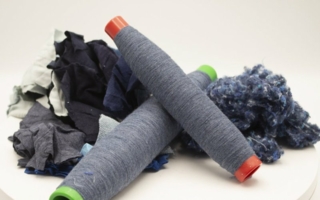
Recycled cotton fibres show clear differences from new material, influencing yarn quality. Experts at the 38th International Cotton Conference Bremen explain which parameters are key. © fivan / stock.adobe.com generiert mit KI
Why fibre quality matters in mechanical recycling
Recycled fibres play a key role in achieving a circular textile economy, yet their processing raises fundamental quality questions: how they compare with new cotton, how their properties can be measured and how fibre quality influences yarn production. Conventional parameters such as fibre length distribution and nep content can only be measured to a limited extent in recycled material. Their damaged, heterogeneous structure requires adapted testing methods, while factors such as the proportion of unopened yarn remnants gain importance.
Testing approaches from laboratory and industry
Stefan Fliescher from Textechno presents advances in testing technology for mechanically recycled fibres. Optimised measurement techniques are essential to improving quality assurance and enabling consistent yarn qualities. Adele Abdoos from Mesdan examines laboratory shredding and carding processes to simulate fibre recovery. Woven textiles prove more resistant during shredding and retain longer fibres, while knitted materials generate more short fibres. Adjusted machine settings, such as increasing the main drum speed and reducing the working roller speed, showed clear benefits. Small?scale laboratory tests reliably predict industrial outcomes and reduce material losses.
Comparing recycled and new cotton yarn
Christine Wörner from Uster Technologies demonstrates how the quality of recycled cotton depends on the origin and fibre properties of the waste material. A matrix summarises fibre properties across sources and indicates how production parameters must be adapted to achieve the desired yarn quality, including effects on efficiency and yarn characteristics. Pierre Lanfer from RWTH Aachen University analyses two mechanical recycling cycles. Initial data show a strong reduction in fibre length in the first cycle, with a smaller loss in the second, based on detailed characterisation of fibres, yarns and fabrics from both stages.
The preliminary programme, additional meetings and the registration form are available at www.cotton-conference-bremen.de.