06/05/2026 – Extended producer responsibility in Germany — auf Deutsch lesen
Textile industry sets up joint producer body
Germany’s textile and fashion industry has announced the creation of a Joint Producer Body for Textiles. The new structure is intended to support a functioning, efficient and resource conserving circular economy and to help implement an EPR system with clear ecological steering effects and binding producer involvement.
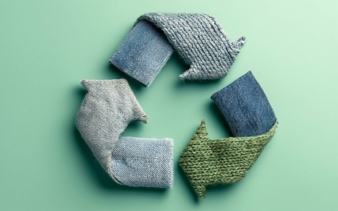
At IFAT in Munich, the German textile and fashion industry announces the creation of a Joint Producer Body for Textiles to help shape a textile EPR system with clear ecological steering effects and binding producer involvement. © Lemonkey / stock.adobe.com - generiert mit KI
IFAT as stage for the announcement
At IFAT in Munich, the world’s leading trade fair for environmental technologies as well as water, sewage, waste and raw materials management, the sector presented its plans for the Joint Producer Body for Textiles. With this step, producers and distributors of clothing, home textiles and footwear position themselves as central system players for implementing extended producer responsibility in Germany.
During a visit by Federal Environment Minister Carsten Schneider to the special "textile circularity" area, Ingeborg Neumann, President of the German textile and fashion association textil+mode, officially announced the new body: "If producers are to pay in future for the disposal and recovery of used clothing, then they must also be able to actively shape and manage this system. Producers have the expertise and know how when it comes to circular economy. However, they are not available simply as a cash office that pays for the disposal of low quality ultra fast fashion without having placed it on the market. It cannot and must not be that medium sized textile and fashion companies producing high quality goods pay for the cheapest textile products that are flooding our markets via Asian shopping apps. Here we are drawing a clear stop line."
Central coordinating role in the textile EPR system
The political background is the national implementation of European requirements on extended producer responsibility for consumer textiles. Key points from the Federal Environment Ministry envisage that producers will in future bear the costs for collection, recycling and disposal of used textiles.
The Joint Producer Body for Textiles is intended to take on a central coordinating role in this future EPR system. Its tasks include steering and supervising producer responsibility organisations based on transparent and uniform criteria, ensuring an industry driven system architecture without duplicate structures, bundling sector specific expertise for clothing, home textiles and footwear, and contributing to a cost and bureaucracy efficient implementation of legal requirements. Purely advisory bodies without decision making powers are, in the view of the industry, not sufficient.
Level playing field and used textiles collection
A key concern for the sector is that all market actors are included on an equal and mandatory basis. This explicitly covers international fast fashion providers and platforms from third countries. Only then, the industry argues, can distortions of competition be avoided and EPR costs prevented from impacting German companies alone.
At the same time, the sector calls for a transparent cost structure based on robust analyses and for effective participation and control rights for producers. The aim is a system with clear ecological steering effects that creates incentives for durable, repairable and circular ready products.
The industry is also advocating a fundamental realignment of used textile collection. In its view, this requires clear responsibilities, reliable data, exclusion of so called cherry picking and dynamic, legally robust quota models. Rigid specifications are considered unsuitable, as producers have no direct influence on consumer return behaviour.