
Login für Abonnenten

Please log in to read subscribed content.


  • Contents
  • Media
  • Newsletter
  • Editorial team
  • Contact
  • Issues digital
textile network
textile network
  • Technical Textiles
  • Fashion
  • Home Textiles
  • Business
  • Fibres & Yarns
  • Maschinery & Technology
  • Nonwovens
search.box
  • Contents
    • Technical Textiles
    • Fashion
    • Home Textiles
    • Business
    • Fibres & Yarns
    • Maschinery & Technology
    • Nonwovens
  • Media
  • Newsletter
  • Editorial team
  • Contact
  • Issues digital

23/07/2019 – E. Wendt*, S. Krzywinski*, M. Awais*, B. Bauer**, M. Harnisch***, B.-M. Wölfling***, E. Claßen***

Methodenentwicklung zur skalenübergreifenden Modellierung, Auslegung und digitalen Darstellung von Outdoor- und Schutzbekleidung

Das Ziel des Projektes bestand in der Erarbeitung von anwendungsnahen Grundlagen zur simulationsgestützt kombinierten Betrachtung von geometrischen, textilmechanischen und thermodynamischen Parametern und Prozessen zur Gestaltung und Auslegung von Outdoor-Textilien und -Produkten.

Next image
Abb. 1: Thermische Regulation zwischen Mensch, Bekleidung und Umgebung
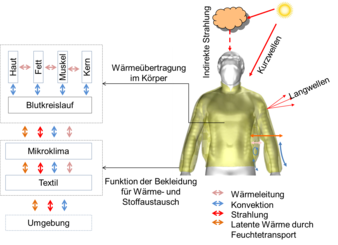
Abb. 1: Thermische Regulation zwischen Mensch, Bekleidung und Umgebung
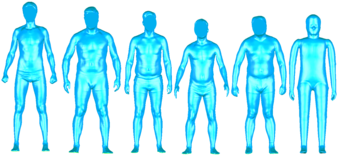
 
Abb. 1: Thermische Regulation zwischen Mensch, Bekleidung und Umgebung

Abb. 1: Thermische Regulation zwischen Mensch, Bekleidung und Umgebung

 
Abb. 2: 3D-CAD-Daten - Polygonmodelle (5 Testpersonen, Manikin)
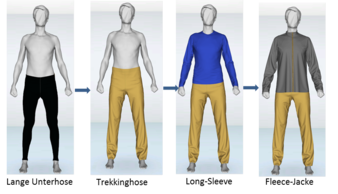
Abb. 2: 3D-CAD-Daten - Polygonmodelle (5 Testpersonen, Manikin)

 
Abb. 3: Simulation der Bekleidungsschichten (CS1 und CS2, Testperson 1)
Abb. 3: Simulation der Bekleidungsschichten (CS1 und CS2, Testperson 1)

 
Abb. 4: Porengrößenverteilung im Bekleidungssystem CS2 (grün: Minimum; rot: Maximum), DITF

Abb. 4: Porengrößenverteilung im Bekleidungssystem CS2 (grün: Minimum; rot: Maximum), DITFF
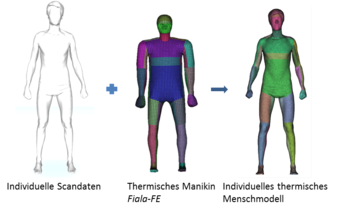
 
Abb. 5: Generierung eines individuellen thermischen Menschmodells (Testperson 1)
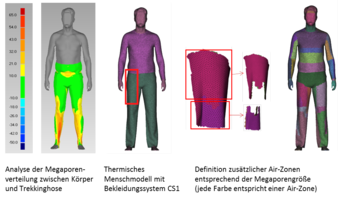
Abb. 5: Generierung eines individuellen thermischen Menschmodells (Testperson 1)

 
Abb. 6: Segmentierung der Oberfläche des Bekleidungssystems in Air-Zonen (Testperson 3)
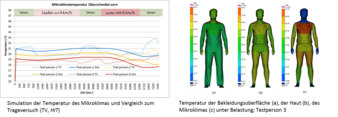
Abb. 6: Segmentierung der Oberfläche des Bekleidungssystems in Air-Zonen (Testperson 3)

 
Abb. 7: Ergebnisse der thermophysiologischen Simulation

Abb. 7: Ergebnisse der thermophysiologischen Simulation

 
Back to article
  • Most read
  • Latest

19/10/2026

Binder

Flexible Fastening Solutions for Defence Applications

By  Larissa Terwart

16/09/2026

ITMA 2027

From machines to connected systems

By  Antje Schmidtpeter

21/10/2026

Security and Military Equipment

Webbings and Straps for Military and Police

By Editorial staff

20/10/2026

The Seam as a Safety Factor

Gütermann: Sewing Thread for TL Tests

von Redaktion

21/10/2026

Outlast Interview - First Part

Thermal comfort is performance

by Anne Sickor

21/10/2026

Outlast Interview - First Part

Thermal comfort is performance

by Anne Sickor

21/10/2026

Outlast Technologies

Expert-Interview with CEO Martin Bentz - Part 2

by Anne Sickor

21/10/2026

Security and Military Equipment

Webbings and Straps for Military and Police

By Editorial staff

21/10/2025

Advertisement

Proof of compliance? One system.

von Koppermann Computersysteme GmbH

20/10/2026

Annual conference

textil+mode: Neumann Confirmed as President

By  Daniel Keienburg

  • Meisenbach Verlag
  • Media
  • Data security
  • Imprint
  • Instagram
  • LinkedIn
  • RSS Feed
Meisenbach Logo