
Login für Abonnenten

Please log in to read subscribed content.


  • Contents
  • Events
  • Editorial team
  • Media
  • Newsletter
textile network
textile network
  • News
  • Technical Textiles
  • Fashion
  • Home Textiles
  • Business
  • Issues digital
search.box
  • Contents
    • News
    • Technical Textiles
    • Fashion
    • Home Textiles
    • Business
    • Issues digital
  • Events
  • Editorial team
  • Media
  • Newsletter

23/07/2019 – E. Wendt*, S. Krzywinski*, M. Awais*, B. Bauer**, M. Harnisch***, B.-M. Wölfling***, E. Claßen***

Methodenentwicklung zur skalenübergreifenden Modellierung, Auslegung und digitalen Darstellung von Outdoor- und Schutzbekleidung

Das Ziel des Projektes bestand in der Erarbeitung von anwendungsnahen Grundlagen zur simulationsgestützt kombinierten Betrachtung von geometrischen, textilmechanischen und thermodynamischen Parametern und Prozessen zur Gestaltung und Auslegung von Outdoor-Textilien und -Produkten.
Previous image Next image
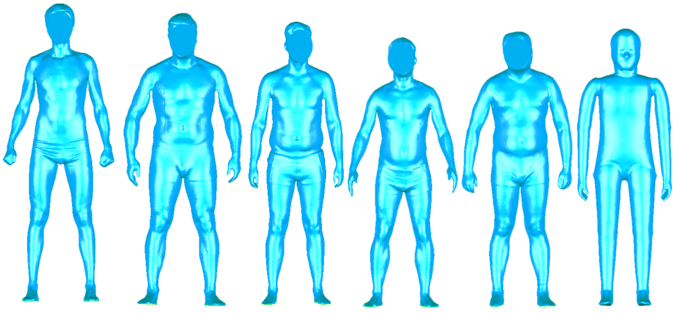
Abb. 2: 3D-CAD-Daten - Polygonmodelle (5 Testpersonen, Manikin)
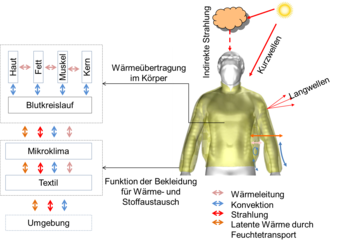
Abb. 2: 3D-CAD-Daten - Polygonmodelle (5 Testpersonen, Manikin)

 
Abb. 1: Thermische Regulation zwischen Mensch, Bekleidung und Umgebung
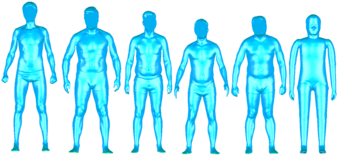
Abb. 1: Thermische Regulation zwischen Mensch, Bekleidung und Umgebung

 
Abb. 2: 3D-CAD-Daten - Polygonmodelle (5 Testpersonen, Manikin)
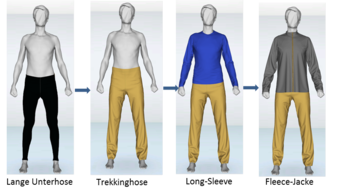
Abb. 2: 3D-CAD-Daten - Polygonmodelle (5 Testpersonen, Manikin)

 
Abb. 3: Simulation der Bekleidungsschichten (CS1 und CS2, Testperson 1)
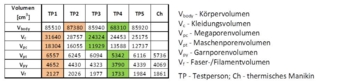
Abb. 3: Simulation der Bekleidungsschichten (CS1 und CS2, Testperson 1)

 
Abb. 4: Porengrößenverteilung im Bekleidungssystem CS2 (grün: Minimum; rot: Maximum), DITF

Abb. 4: Porengrößenverteilung im Bekleidungssystem CS2 (grün: Minimum; rot: Maximum), DITFF
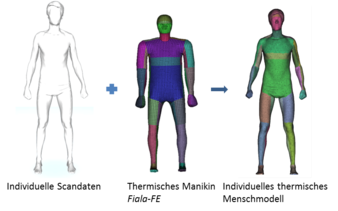
 
Abb. 5: Generierung eines individuellen thermischen Menschmodells (Testperson 1)
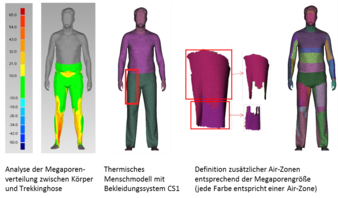
Abb. 5: Generierung eines individuellen thermischen Menschmodells (Testperson 1)

 
Abb. 6: Segmentierung der Oberfläche des Bekleidungssystems in Air-Zonen (Testperson 3)
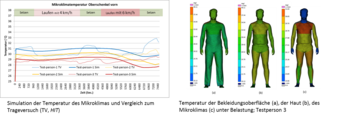
Abb. 6: Segmentierung der Oberfläche des Bekleidungssystems in Air-Zonen (Testperson 3)

 
Abb. 7: Ergebnisse der thermophysiologischen Simulation

Abb. 7: Ergebnisse der thermophysiologischen Simulation

 
Back to article
  • Most read
  • Latest

19/11/2025

Innovative steam recycling

Cascade’s impact on textile production

By  Editorial staff

12/11/2025

Im Würzburger Kunsthaus Michel

VDMD: Festival der Nachhaltigkeit

By  Daniel Keienburg

22/10/2025

Trade Fairs

Heimtextil 2026: Trends and AI at the Forefront

By  Editorial staff

30/12/2025

On our own account

Industry review 2025

By  Editorial staff

10/12/2025

Plant closure

Failed restructuring: Kelheim Fibres prepares for phase-out of production

By  Daniel Keienburg

05/01/2026

Most‑Read Insights

Top 5 of the Week – 1/2026

By  Kathrin Elling

30/12/2025

On our own account

Industry review 2025

By  Editorial staff

23/12/2025

Advances in Measuring Recycled Cotton Fibres

Recycled Fibre Quality in Focus

By  Daniel Keienburg

18/12/2025

Christmas Greetings

Time to say THANK YOU

By  Antje Schmidtpeter

16/12/2025

Strengthening sustainable textile supply chains

Textile label “Green Button” set for further development

By  Antje Schmidtpeter

  • Meisenbach Verlag
  • Media
  • Data security
  • Imprint
  • Twitter
  • Instagram
  • LinkedIn
  • RSS Feed
Meisenbach Logo