
Login für Abonnenten

Please log in to read subscribed content.


  • Contents
  • Events
  • Editorial team
  • Media
  • Newsletter
textile network
textile network
  • News
  • Technical Textiles
  • Fashion
  • Home Textiles
  • Business
  • Issues digital
search.box
  • Contents
    • News
    • Technical Textiles
    • Fashion
    • Home Textiles
    • Business
    • Issues digital
  • Events
  • Editorial team
  • Media
  • Newsletter

23/07/2019 – E. Wendt*, S. Krzywinski*, M. Awais*, B. Bauer**, M. Harnisch***, B.-M. Wölfling***, E. Claßen***

Methodenentwicklung zur skalenübergreifenden Modellierung, Auslegung und digitalen Darstellung von Outdoor- und Schutzbekleidung

Das Ziel des Projektes bestand in der Erarbeitung von anwendungsnahen Grundlagen zur simulationsgestützt kombinierten Betrachtung von geometrischen, textilmechanischen und thermodynamischen Parametern und Prozessen zur Gestaltung und Auslegung von Outdoor-Textilien und -Produkten.
Previous image Next image
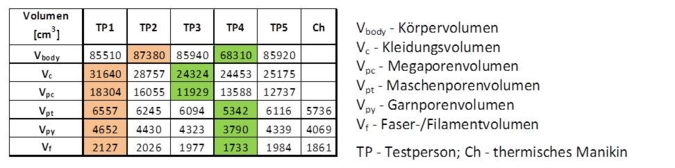
Abb. 4: Porengrößenverteilung im Bekleidungssystem CS2 (grün: Minimum; rot: Maximum), DITF

Abb. 4: Porengrößenverteilung im Bekleidungssystem CS2 (grün: Minimum; rot: Maximum), DITFF
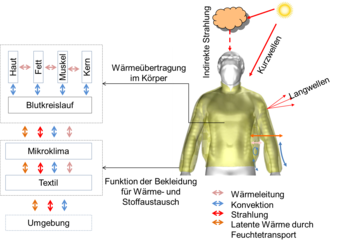
 
Abb. 1: Thermische Regulation zwischen Mensch, Bekleidung und Umgebung
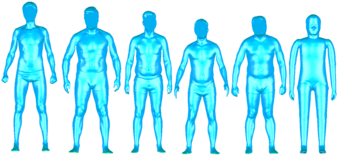
Abb. 1: Thermische Regulation zwischen Mensch, Bekleidung und Umgebung

 
Abb. 2: 3D-CAD-Daten - Polygonmodelle (5 Testpersonen, Manikin)
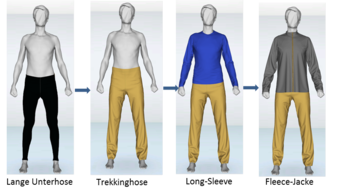
Abb. 2: 3D-CAD-Daten - Polygonmodelle (5 Testpersonen, Manikin)

 
Abb. 3: Simulation der Bekleidungsschichten (CS1 und CS2, Testperson 1)
Abb. 3: Simulation der Bekleidungsschichten (CS1 und CS2, Testperson 1)

 
Abb. 4: Porengrößenverteilung im Bekleidungssystem CS2 (grün: Minimum; rot: Maximum), DITF

Abb. 4: Porengrößenverteilung im Bekleidungssystem CS2 (grün: Minimum; rot: Maximum), DITFF
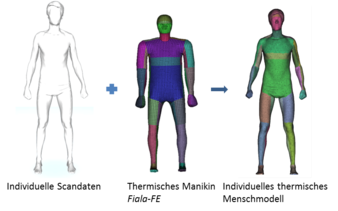
 
Abb. 5: Generierung eines individuellen thermischen Menschmodells (Testperson 1)
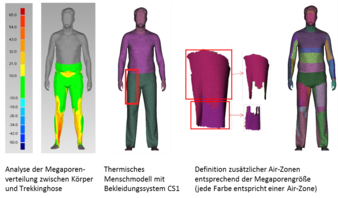
Abb. 5: Generierung eines individuellen thermischen Menschmodells (Testperson 1)

 
Abb. 6: Segmentierung der Oberfläche des Bekleidungssystems in Air-Zonen (Testperson 3)
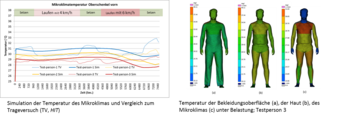
Abb. 6: Segmentierung der Oberfläche des Bekleidungssystems in Air-Zonen (Testperson 3)

 
Abb. 7: Ergebnisse der thermophysiologischen Simulation

Abb. 7: Ergebnisse der thermophysiologischen Simulation

 
Back to article
  • Most read
  • Latest

21/04/2026

Advertisement

Bringing Textile Durability to Life at the Livinguard Booth at Techtextil

by Livinguard Technologies

16/04/2026

Restart of the circular knitting business in Albstadt

Mayer & Cie.: Asset transfer completed and operations restarting

By  Daniel Keienburg

21/04/2026

Advertisement

Product Variety & Service for Embroidery

by GUNOLD GmbH

21/04/2026

Techtextil 2026

Impressions from Frankfurt

By  Antje Schmidtpeter

21/04/2026

Techtextil and Texprocess

Innovation Awards 2026

By  Daniel Keienburg

24/04/2026

Techtextil 2026

New products, discussions, and the show-floor mood – our trade fair update

By  Kathrin Elling

23/04/2026

interspare Textilmaschinen

Techtextil: latest developments and upgrade solutions

By  Larissa Terwart

23/04/2026

Techtextil 2026

Rudolf presents bio-based functional finishes

By  Daniel Keienburg

21/04/2026

Lycra at Techtextil 2026

New Lycra Antistatic Fiber for Workwear

By  Daniel Keienburg

21/04/2026

Advertisement

Bringing Textile Durability to Life at the Livinguard Booth at Techtextil

by Livinguard Technologies

  • Meisenbach Verlag
  • Media
  • Data security
  • Imprint
  • Instagram
  • LinkedIn
  • RSS Feed
Meisenbach Logo