
15/04/2026 – Orta and Archroma — auf Deutsch lesen
Denim dyed with wool waste
Archroma’s fibercolors dyes, synthesized from wool waste, enable Orta to launch commercially ready denim shades with sulfur dye performance and GOTS approval.
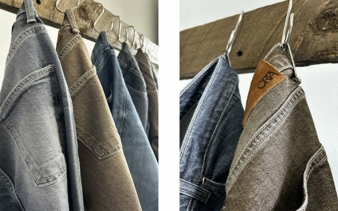
Denim dyed with Archroma's fibercolors: Orta introduces commercial shades made with dyes containing at least 50 percent wool waste. © Archroma
Circular dye chemistry entering production
Orta has introduced its first denim collection dyed with fibercolors, a dye range created by Archroma using at least 50 percent pre-consumer wool waste. The starting material consists of fleeces that sheep farmers would otherwise pay to discard. By turning this waste into a usable resource, the chemistry replaces petroleum-based inputs at the dye manufacture stage without adding water, energy or waste compared to standard production.
The technology was assessed in a trial carried out in late 2025. Based on these results, Orta selected three tones for its initial production run. The shades include diresul fiber-teak in brown, diresul fiber-slate in blue grey and diresul fiber-graphite in dark grey. Together they demonstrate how defined aesthetics can be aligned with lower-impact dye solutions.
Performance and compliance considerations
For mills and brands, the relevance lies in the process compatibility. Archroma states that fibercolors delivers the same dyeing and fastness performance typically associated with sulfur dyes. The dyes are also GOTS approved, supporting compliance requirements in certified denim programs. This positions the technology as a practical option for manufacturers seeking verified circular inputs without altering their existing dyeing infrastructure.
Orta's move signals commercial maturity. The company, founded in 1953 and focused on denim since 1985, highlights its intention to combine responsible engineering with its established design language. Integrating fibercolors into regular production strengthens that trajectory by linking waste-based chemistry with premium denim applications.
Industry context
The new collection will be shown at Kingpins Amsterdam in mid-April, but the significance reaches beyond a single event. For sourcing teams and technical decision makers, the development illustrates how circular dye systems can transition from pilot scale to broader industry use. It offers a pathway to reduce dependence on fossil-based dye feedstocks while maintaining the performance specifications demanded in denim manufacturing.