19/06/2026 – The European Apparel and Textile Organisation)
Euratex backs Machado for new term
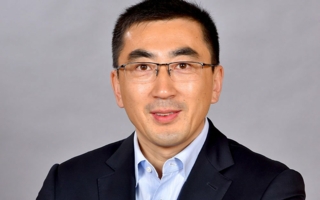
Representing around 200,000 EU textile and clothing companies, Euratex reaffirms Machado to lead a competitiveness-first industrial agenda. He insists Europe must decarbonise its industry, not deindustrialise it.
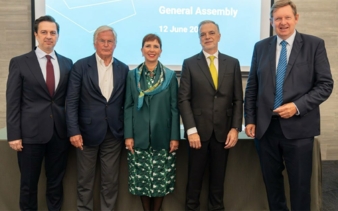
The General Assembly also confirmed the composition of the Euratex Presidency Team, which will support the President in steering the organisation’s strategic direction. From left to right: Ismail Kolunsag (Vice President), IHKIB, Türkiye, Franz Peter Falke (Treasurer), T+M, Germany, Barbara Cimmino (Vice-President), Confindustria Moda, Italy, Mario Jorge Machado (President) and Gregory Marchant (Vice President), UIT, France. © Euratex
Competitiveness first
By re-electing Mario Jorge Machado as President, the Euratex General Assembly opts for continuity at a time of rising costs, global competitive pressure and a demanding twin transition towards sustainability and digitalisation. With a background in Production Polymer Engineering from the University of Minho and extensive industrial experience, Machado links innovation, skills and investment directly to competitiveness.
He has underlined that without competitiveness there can be no investment, innovation, sustainability or strategic autonomy. For textile and clothing manufacturers, this translates into a presidency that will continue to argue for a stronger business environment, including support for automation, digitalisation, artificial intelligence, skills and innovation, with particular attention to SMEs.
Fair rules for all products
A second focal point of the new mandate is market conditions. Machado has repeatedly called for the same rules to apply to everything sold in Europe, not only to what is made in Europe. He points to stronger market surveillance, better border enforcement and more effective control of imports sold via digital platforms, so that products which bypass EU safety, environmental and consumer rules do not undercut compliant European production.
Euratex links this to equal enforcement and fair competition, aiming at a market in which compliance is rewarded rather than penalised.
Transition as source of strength
On the green and digital transition, Machado argues that sustainability must become a source of competitiveness, not a burden. According to Euratex, companies need realistic rules, affordable energy, workable implementation and targeted support to adapt.
Stimulating demand for sustainable European-made textiles is part of this agenda, for example through public procurement and feasible transparency tools. Machado will be supported by a presidency team from Germany, Italy, Türkiye and France as Euratex pursues its priorities of ambitious industrial policy, innovation and skills, free and fair trade and sustainable supply chains.